
Activ Life Postcard [wellness tip #7]
Dear Activ Life enthusiast
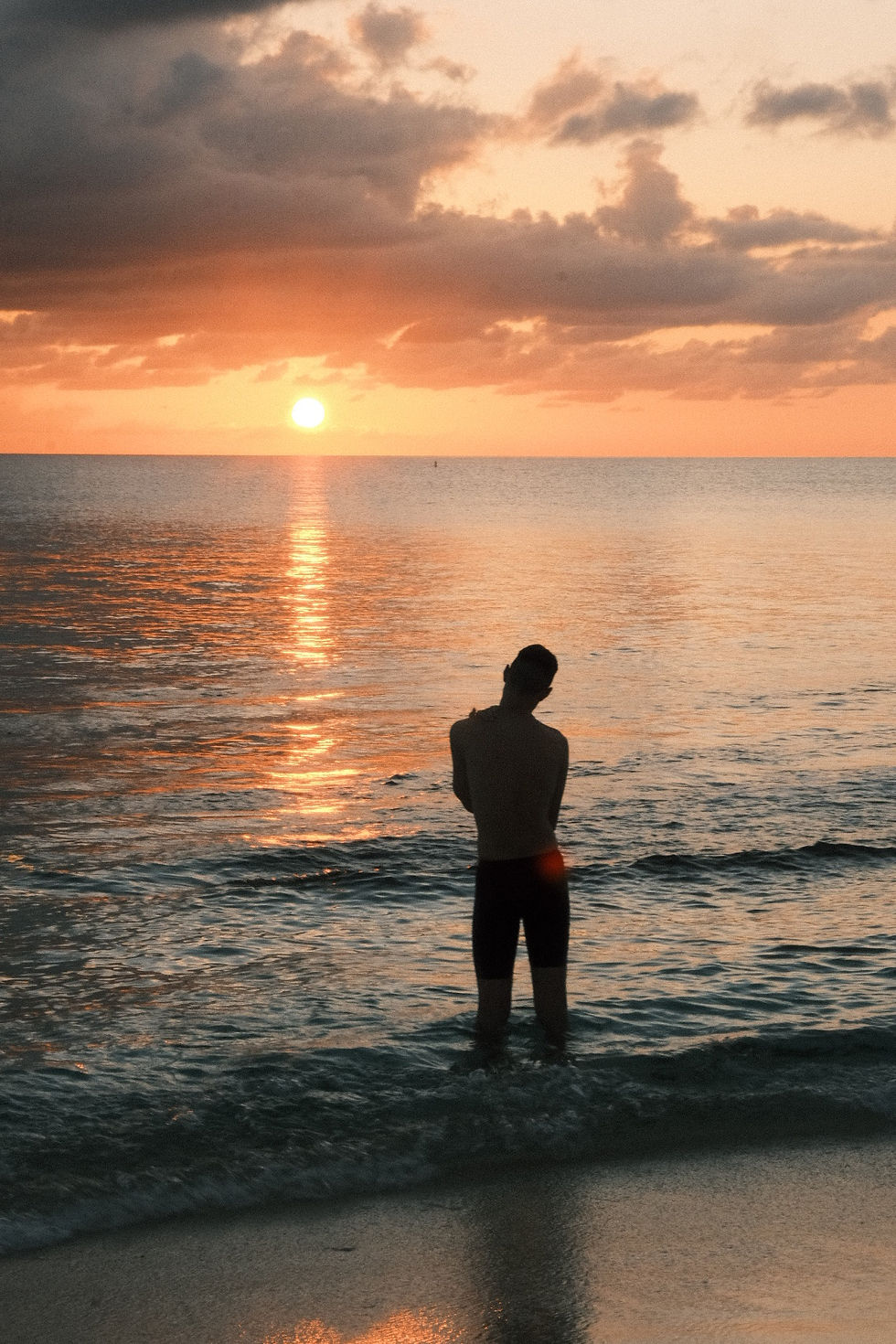
Sea therapy. Have your heard about it? Read on for a 15-minute routine for physical, emotional and mental benefits for long term wellness; inspired by this week’s stunning Activ Life Postcard – a man stretching post-swim session at sunset.
Have you ever noticed that you are more buoyant in the sea than the pool? The ocean’s salt content increases water density, which increases buoyancy. In the Dead Sea, you can’t even sink without forcing yourself down — but even regular seawater can make you feel up to 3% lighter than in freshwater.
The buoyancy of salt water reduces joint stress, while the magnesium can help relax muscles and ease soreness after exercise. Salt water contains minerals like magnesium, potassium and calcium, which can help reduce inflammation, cleanse pores and promote healing of small cuts or spots. Inhaling sea mist can act like a mild saline spray, helping to clear nasal passages and soothe sinus inflammation. This is why coastal air often feels easier to breathe. Swimming in cooler salt water also encourages blood to flow from extremities toward the core, then back out again when you warm up — improving overall circulation
The combination of rhythmic waves, immersion and mild cold-water exposure stimulates the parasympathetic nervous system, lowering stress hormones like cortisol. Sea swimming releases endorphins and increases norepinephrine levels, which can leave you feeling more alert and euphoric — a natural “ocean high.” The sensory experience of the sea — sound, smell, touch, and sight — pulls you into the present moment, helping quiet anxious thoughts.
If that’s not enough to give sea therapy a go, cold-water immersion can help regulate circadian rhythms, making it easier to fall asleep and improving deep sleep quality. Repeated exposure to cold salt water has been linked to improved immune function, possibly due to mild stress adaptation (hormesis).
Try this 15-minute sea therapy routine and let us know how you feel in the comments.
Note: Best done in safe, shallow water, ideally with someone else present.
Firstly, stand on the shoreline, breathe deeply, and listen to the waves. Take 4–6 slow breaths, inhaling through the nose and exhaling through the mouth. This helps your nervous system shift toward “rest and digest” mode.
Now walk in slowly until the water is at your knees. Splash your face, neck, and wrists with seawater before going deeper. Feel the salt on your skin — this mild abrasive helps exfoliate and wakes up your senses.
Go to waist or chest depth and pause. Let your arms float out to the sides and roll your shoulders to loosen tension. Take in the horizon — keeping your eyes on a distant point is grounding and calming.
Gently walk or slow-stroke through the water. Focus on the sensation: the pull of the tide, the texture of salt water on skin, the sound of waves around your ears. If you’re comfortable, dunk fully and let your body float for a few moments.
Walk back to shore slowly, noticing the sand under your feet. Once out, dry off but leave a little salt residue on your skin for a while — the minerals can continue to nourish your skin. Drink fresh water to rehydrate.
Walking on wet sand is a mild foot massage and stimulates nerve endings linked to relaxation.
Did you also know that your brain “maps” the water differently than land. Floating or swimming removes constant gravity cues your brain uses to orient itself, shifting your body’s balance and proprioception (sense of where your limbs are). This is why the first few strokes in open water often feel disorienting until your brain recalibrates.
For more transformative wellness habits, contact us for an obligation-free consultation to find out how our personalised 8-week Energy with Ease Program can work for you.
Your favourite travelling yogis
Louise and Sarah


Comments